
Webinar
Oct 9, 2025
Client Success Spotlight: Showcasing HAM/SAM Success with Adient
Unlock the Full Potential of Your IT Assets
📅 Date: October 15, 2025
🕛 Time: 12 PM ET / 9 AM PT
⏱ Duration: 45 minutes including live Q&A
Transcript
India Tellkamp: [00:07] Hi, everyone. Welcome. We’re gonna go ahead and kick off because we are four after. We’ll have people join in. But we do wanna get started because there’s a lot that we have to share—more importantly, that Michael has to share—today, and I’m really excited to get into it.
[00:20] Just a little bit of housekeeping and some intros before we get into the content. So just a little overview of what we’ll do today. So quick intro of Michael and what he does. A brief overview of what Ondaro does. You may have known us previously as Cask, but we recently rebranded, which has been really exciting for us. So you’ll see the new look and feel of Ondaro as we get going here.
[00:45] We’ll also do an intro to Adient and what they do as a large manufacturer here in Michigan, but really is global—all around the country, all around the world. So excited to learn a little bit about that. And then we’ll really start getting into it with their pain points, their goals—specifically as it relates to software and hardware asset management.
[01:05] Then we’ll talk about some of the solutions that they transition into—of course, ServiceNow being at the forefront of that. But then also the implementation and journey itself, the lessons learned, the things that they struggled through but then learned through the things that we did together. The outcomes that they’ve already achieved are incredible, and you’ll probably think we’re making some of them up, but we aren’t.
[01:33] So we’ll talk a little bit about the journey there, and then we’ll get into some of the lessons learned for business leaders. And then specifically talking about finding the right partner, whether it’s Ondaro or someone else. We want you to be well equipped to make a good decision for your company.
[01:49] And then we will have Q&A at the end. But if you have questions throughout, just pop them in the chat. We have a moderator watching the chat. I’ll be watching the chat. It’s hard to sometimes save your questions to the end because you forget them. So pop them in as you think. We want this to be interactive, and we’re really excited that you’re here.
[02:10] So just a couple housekeeping items. I think everyone knows how to unmute. If you really want to, but if you can just keep questions to the chat, and if we want to maybe talk a little bit more about something, we’ll call on you to unmute. And then if you want to show captions, you can just click on More, click on Language & Speech, and then show the live captions for that feature.
[02:34] So just a quick introduction. For those who don’t know me, my name is India. I live in the Grand Rapids, Michigan, area, and I get the pleasure of working really closely with Michael over at Adient. I’ve been in the ServiceNow space about seven years, and I’m really passionate about just making sure our customers get the value that they’ve promised back to the business and the value just to make them better. And so I love what I do. And Michael, I will pass it to you to give a quick overview of yourself.
Michael Chelone: [03:06] Sure. My name is Michael Chelone. I also live in the Grand Rapids area here in Michigan. I’ve been working with Adient since the day we went live and divested from Johnson Controls. I’ve been working with Adient since 2016. Started in the end-user compute space. I’m now an IT director here, and I’m responsible for client compute. Used to be software asset management. That has recently transitioned as of last month. ServiceNow. Some voice mobility as well.
India Tellkamp: [03:35] Just a quick overview of Ondaro. So we have been around for 15 years, and, really, our focus is completely on ServiceNow. So we are very well known for our ServiceNow implementations across all modules, but we also do a lot of transformational work. So roadmapping—aligning your business objectives to what you’re trying to do on the ServiceNow platform—we actually did that activity with Michael last October. It’s been—I can’t believe—a year. But we do a lot of these things around helping you get the most value out of ServiceNow.
[04:14] So a couple overviews. We’ve got about 300 people in the US and almost that many in Brazil now, and then a team in Mexico and Canada as well, all certified on the ServiceNow platform. What I love about our team is a majority of them have come from the implementation side, so they understand ServiceNow in and out. They understand the pitfalls. They understand how to get the most value out of the platform.
[04:43] So, of course, certified. We are a top-four partner based on our experience with over a thousand implementations. We have earned what are called the Product Line Achievements. If you go on the ServiceNow Partner Finder, you can look at all different partners and the qualifications that they have.
[04:58] So yeah, based on our high ratings from clients, our experience across all the ServiceNow modules, and our certified professionals, it puts us at top four globally of all ServiceNow partners.
[05:12] With that being said, Michael, tell us a little bit about Adient and what you all do.
Michael Chelone: [05:16] Yes. So, as I mentioned earlier, we were a divestiture from Johnson Controls, but our primary business is automotive seat systems. We operate in every major region in the world. And you probably drive a vehicle with one of our seats in it. So we manufacture everything from components to foam to metals to the full seat assembly for generally every major OEM globally.
India Tellkamp: [05:41] Perfect. So, before we get into it, I would just like to poll the audience. You can put your answer in the chat. But as it relates to hardware and software asset management, where do you think you are? Are you like a lot of people and you’re manually managing everything out of spreadsheets? Are you all the way at D, where you’re like, “You know what? We have a great HAM and SAM program.” Whether you manage it out of ServiceNow or another tool. What does that look like? Where do you feel like you’re at? Put that in the chat for us real quick.
[06:16] All right, I’ve got a C. Love it, Steve. Some A’s. Some C’s.
[06:21] Let me ask you, Michael. Where would you—before you implemented ServiceNow, where would you have put yourself on the scale?
Michael Chelone: [06:28] So this is an interesting question for us. We were using ServiceNow for hardware asset management in the ITSM module for a very, very long time. From an asset management perspective, I would argue, though, even today, we still use some spreadsheets for stuff. I would argue we’re probably somewhere between A and B for hardware asset management. And looking like we’re going to land in between B and C with SAM here in a couple weeks, actually.
India Tellkamp: [06:57] Cool. Well, let’s get into some of your pain points and some of the objectives that you had for both hardware and software asset management. I know HAM was a project that you tackled last year and are continuing to mature. And then software asset management, we’re actually on the tail end of implementing that. But break those two apart for me and for this audience and talk a little bit about why you even tackled hardware asset management and software asset management. And then why ServiceNow?
Michael Chelone: [07:25] Right. So, we started, as you mentioned, with a joint project in CMDB and hardware asset management. And the reason for that was we were at one point turning over somewhere close to a thousand PCs alone per month. I think it’s closer to 700 now.
[07:42] But the reality is because we have so many disparate sites, we have so much turnover and churn, we also use a lease program. There was a lot of overlap and lost commercial value to us. And we really needed to tackle that and have better visibility. As many of you, I’m sure, have similar constraints, we have a very small asset management team, and we rely on our data sources as well as our local IT to really be our points of contact. And because there’s so many touch points, there was a lot of gaps and failures in that space.
[08:18] We identified very early that there was a lot of overlap in issued devices versus returned devices, and we were having to pay for both of them, which was a big driver as to why we wanted to mature our HAM process. Furthermore, we didn’t really have good visibility into our model management space, and our CIs had been accumulating since we launched ServiceNow in 2017.
[08:47] Many of you may be aware, but HAM is relatively new. It’s three, four years old now, I think. And we launched hardware asset management in ITSM, a highly customized app, which was also generating quite a bit of noise in our environment when it came to asset management.
[09:07] On the software asset management side, we had an entirely different problem. It was in its own siloed standalone solution. It was on a best-in-class service from when we implemented it, but our processes were highly immature. It was dependent on legacy on-prem, and post-COVID, we had a lot of motility in our environment when it came to our office workers, our cloud services we were launching more and more of. And frankly, our ability to generate inventory entitlement matching in near time or real time was nonexistent, and it had led to multiple failures when it came to reporting and pivoting for things like audits or at a station or entitlement management. And as I mentioned SaaS earlier, SaaS is becoming a way of life or has been a way of life for many companies, and it is for us as well. And the majority of our larger spend is SaaS. We were not managing it the way we should have been. So that was also identified as a pain point—a key driver for our software asset management program.
India Tellkamp: [10:18] You talked a little bit about the pain points. And those really do tie in with, I think, some of the objectives. And you touched on those. But talk a little bit about why you selected ServiceNow and why you even selected a partner versus just doing it yourself.
Michael Chelone: [10:37] Sure. So, once again, I’ll break them down into the different products and how we got there. So for HAM, we were already on ServiceNow, and we wanted to mature that product. And we saw it as a natural extension of our operations in the ITSM space. Being able to tie our incidents, change, and problems directly to the assets and have a running life management of those assets was considered a key driver for us—as well as, long-term, putting in front of our customers the ability to directly order and procure their own hardware in a self-service model.
[11:14] The SAM space, the key solutions that we were looking for were really—we actually bid this out. Because from a software asset management perspective, we wanted to make sure we’re making the right decision for ourselves. As I said, we were on a best-in-class solution before we moved to ServiceNow, but we had identified gaps, so we actually bid those out to three different applications before we chose ServiceNow. But we had key components that we included in all of them, which included entitlement revocation and management, SaaS integrations, integrations with our existing MDM solutions, which ultimately led to ServiceNow being selected as the right partner, not to mention the already excellent CSDM framework that gives us the opportunity to leverage data across all of those silos in a single place for all of our various stakeholders. So from a solutions perspective, we ended up sourcing ServiceNow.
[12:15] As for how we chose a partner, we had implemented and learned lessons from our first ITSM asset implementation that we needed to put more diligence around our partner selection. And as I said, we had implemented an ITSM asset back in 2017, and we got what we paid for. We had a partner who did what we asked, and what we asked wasn’t necessarily the right solution for our business, because we are not professionals in every single discipline. And you may not always have the right people who are necessarily educated in every tool set or every process.
[12:54] So part of what we did when we put an RFP together for selecting a partner is we actually put in requirements of thought leadership, product line achievement. We put in requirements of the integrations we needed from a technical as well as the functional requirements. And we do this for every implementation of ServiceNow. So we sometimes get different partners than Ondaro to really identify the right partner for the right solution we’re trying to implement and to challenge our own thoughts on how we execute.
India Tellkamp: [13:27] Yeah. And when we put here on deploying the standard value delivery methodology, that is really Ondaro’s methodology that we implement and we have used to implement both SAM and HAM for Adient, and it really follows ServiceNow’s Now Create methodology. So if you’re wondering what that is, that’s really our methodology for implementation.
[13:48] And I’ll just say, I remember, Michael, being part of your RFP process. And I just appreciated the transparency that you provided during an RFP. And I think a lot of companies potentially that are on here are required to go through an RFP. And oftentimes it feels like there’s this huge, thick curtain between you and the customer because you don’t feel like you can talk to them. You don’t feel like you can have a conversation. You don’t know what their true requirements are. But you guys did a great job of really defining your requirements. But then you also did open the door when we had questions or we responded, and you were like, “Hey, you’re going in the right direction, but I need you to go a little bit more this way. Can you resubmit something that’s a little bit more aligned to my expectations?” And we were able to do that and get to a place where we knew what you guys needed, and you guys had a pretty robust set of requirements.
[14:40] And I wanna get into a little bit of, really, the implementation journey. And I think picking a software, while it’s not easy, it’s probably the easiest part of the process. Where the rubber meets the road is actually implementing it. And I think there was some differences between software and the hardware project that we wanna talk about here as far as what went well, didn’t go well, and how do you successfully implement ServiceNow?
Michael Chelone: [15:15] Yeah, those are excellent questions. And I do want to tie on to your comment about the RFP. And this is more for the audience. As a leader—and I don’t know how your procurement processes work—when we were going through the down selection and the proposals, we included our own thought leaders and our own engineers and architects as part of the RFP process. And frankly, the reason we reached back out—and I did this to every RFP respondent—was to give them guidance on what we were actually looking for in their RFP response.
[15:53] So Ondaro (Cask at the time) had done an excellent job of putting the right people in the room and presenting their solution. But frankly, the RFP response was written in such a way that would not have been down selected. And that’s fine, as long as you’re willing to communicate with your partners. And all partners do this. They sometimes have canned responses. You should feel comfortable reaching back out to them and saying, “Hey, look, how you’re presenting or how you’re writing”—and sometimes it’s vice versa, both directions—“aren’t aligned with what we really need.” And that’s important because you guys run into commercial issues, you run into implementation issues, and what you’re expecting to get and what you’ve written to get should be aligned.
[16:38] Moving on to the strategic vision, how we built our vision, we already had a plan in place. We knew what our gaps were on HAM and SAM, but we also know where we want to go from an outcome perspective and that we have been spending years developing. From my background, I’m a Microsoft SCCM endpoint kind of guy. And ServiceNow is relatively new to me. I’ve only been in the product for about three years. But its ability to be an outcome engine really drove our strategy around what leadership and other stakeholders were looking for. We thought it was important to put that entire road map together before we started solutioning and replacing tools, because tools—you can buy tools anywhere. “What are you trying to get from those tools?” was probably the most important thing we wanted to generate before we went and sourced an RFP.
[17:34] I highly recommend that either you talk to your ServiceNow account rep, or if you have preferred partners, work on building that vision, not necessarily from a ServiceNow perspective, but an outcome perspective for your business. And where does ServiceNow fit in that if it does?
[17:54] From a HAM and SAM perspective, to get to how we had different outcomes from an implementation perspective, it was very different. Both projects, I would argue, were successful, but only one thus far has been transformative. And that was not what we were aiming for. The HAM project was executed with almost exactly the same team members on both the Ondaro side and the ServiceNow side here at Adient. But we had very different product owners as well as vision leadership in those implementations.
[18:39] So from a HAM perspective, we managed to execute and meet our deliverables, but we made some mistakes when we implemented that. And we had some additional baggage we brought with us, which really tied down that project. We had legacy customizations in hardware asset management. We had a team that we brought in after the decision was made, and they approached the project with, “We don’t understand why we need to be doing this. Our process works.” So there was a fundamental disconnect between leadership versus the product team. And we had a lot of tech debt that we ended up being slow to make decisions on in the HAM process.
[19:27] Versus Sam. We brought our product owner in very early, aligned him, and he’s actually on the call right now. Jannik is on the call. He’s the one with the weird, funny picture. We brought him in very early. We gave that team training. We aligned on the pain points that had been driving the decision-making to begin with, and we ultimately were quick to make decisions and execute with a clean-sheet methodology because the risk to our business was significantly less than trying to bring our old processes forward.
India Tellkamp: [20:09] I want to double down on something you said. And I think you said one of the differences between the success of SAM and why it’s gone so well is you have a strong product owner. And you are the director—the champion, really—of the ServiceNow platform. You understand it. But you enabled others to come in and really own it because you can’t be—realistically, let’s be honest: We can’t all be on every single call. We have to have team members that we can trust to run a project, be passionate about it, get excited about getting up every day and getting into workshops with Ondaro and talking about integrations and talking about managing your SaaS products and just the nitty gritty of software asset management.
[21:00] Tell me a little bit about that for you and how you’ve managed it yourself, being involved as a project sponsor but also enabling others on your team to run it so that you can have that type of success and not everything is relying on you and the project is running smoothly.
Michael Chelone: [21:19] Right. So on the SAM team—and I’ll speak to them because they did report to me—it helps significantly. Not only were they obviously engaged early in the process, but because we were able to work together early and often on “What are our gaps? What do we want out of this? How did that last audit go?” designing and theory crafting in both the development instances—which are free from ServiceNow—as well as building in our own training instance and potential solutions really accelerated the passion throughout the entire team about what we could do. The art of possible, as it were. That has really carried through the entire team. And not just into the ServiceNow product team, which reports to me, but also the software asset management team, which really wants to execute those outcomes. Because they see the value of a consolidated workspace gives to them and also allows them to share, which shifted some of their workload responsibility to the application owners. So they saw not only were their data and processes going to become more efficient, they saw that the work that they were doing and putting in was also going to drive more effectiveness.
India Tellkamp: [22:44] So basically, answering that question, “What’s in it for me?” It was pretty obvious to them. “This is how it’s gonna help me day to day, make my life easier.”
Michael Chelone: [22:53] Absolutely. And ultimately, this should be the decision of any product or platform is how do you become more effective, more efficient? How do you get people on board? And then “What’s in it for me?” is a great way to phrase that.
India Tellkamp: [23:06] What else? I’ve got one that I thought was a big differentiator between the projects, and I think this is a topic that is really underrated but so critical, and that is project management. Having a project manager who also has a stake in the game. They understand the value of what is being implemented. They’re not just—I think we talked about this in our prep calls—they’re not just scheduling meetings, but they’re involved in meetings. They’re tracking actions. They’re contributing. They’ve got a little bit of that technical expertise themselves. They’re keeping everyone on the same page. Do you wanna talk a little bit about that and what differences you saw and where you feel like success has come from, especially on SAM?
Michael Chelone: [23:58] I’ve actually encountered this quite a few times in various projects I’ve been part of, and I caution the audience to keep an eye out for similar constraints. There is a difference between a project manager and a project coordinator. And what I mean by that is they may have titles, but a project manager is somebody that you have delegated authority to to manage not only the outcome of the project, but those resources that are from all different stacks and silos that are required to execute that project.
[24:31] A project coordinator is going to check boxes, make sure the toll gates are followed, make sure the phase gates are done, make sure the projects get updated. But the difference is ownership and accountability. And frankly, I know all of you can’t be in every project pane, and I think there’s somewhere along four or five of them just for SAM every week in my organization. There's no way I can make all of those happen. You really need that project manager to feel like they’re empowered and to act like they’re empowered. And it’s a key driver of a successful project. So having—I think we’ve talked now about product owners engaged. You also have to have your project managers wanting to see the success just as much as anybody else.
India Tellkamp: [25:17] So we’ve got those two. Is there anything else that you would say has led to the success of SAM? And we’ll get here in the next slide about some of the results that you’re seeing, which are incredible. But is there anything else that you would say really has led to successful projects, whether it’s prep work beforehand. I know you said you gathered requirements, and you knew what you were looking to achieve before the project. I know that’s a big one. But is there anything else technically or preparedness-wise that you would want to share with everyone here as they’re getting ready to start a project?
Michael Chelone: [25:52] I think we had two things in our SAM kickoff versus our HAM. Our SAM product team was ready with the various datasets that they knew they needed before the kickoff was even ready. This actually allowed us to pull that project forward by a few weeks. And furthermore, being willing to make decisions, right or wrong, quickly, to keep scope and project on track.
[26:20] We had a meeting, I want to say, three or four weeks ago, where my engineers were getting overly invested in DMC. And our current product doesn’t do a very good job of getting information out of the DMC, and when we got down to it, we were talking about 14 servers. For a company that has over 170 sites, that’s a nothing burger. So we told the team, “Hey, this is great that you’re thinking about it, but it’s not important. Backburner it right now. If you get time and you have extra cycles, sure, solve it. But it’s not important to these spending cycles on the project time right now.”
[26:59] So be ready and willing to make those decisions quickly, because engineers—and I used to be one of them—want to solve every problem. And that’s not necessary for an outcome of a project of this scope.
India Tellkamp: [27:13] Mm-hmm. That is such a good one. I love that.
[27:17] Well, let’s get into some of the outcomes that you have seen. SAM is the Big Bang, right? We’re not even finished, and—cat out of the bag—you’re already realizing over a million dollars in savings. Hit on that one first. Because I think everyone’s eye probably goes to that bullet first. How are you doing that? So talk a little bit about that one and then expand maybe into some of the other things that you’ve started to see and that you’re even anticipating to see.
Michael Chelone: [27:48] Sure. So in the SAM perspective, as I said, we own software asset management. We’re implementing it. Part of my ownership includes Microsoft products. And I’m sure many of you have EAs or SCEs with Microsoft. The difference between how ServiceNow presented the data and the reliability of that inventory matching our entitlement was something we were able to realize very early—mainly right around the kickoff time—because the inventory was so much more reliable, and we were able to tie it off. We managed to execute a savings in our true-down with Microsoft, and how many people get to say that? Which has had a significant impact on our budgets and our go-forwards. It’s also something we had to explain to our leadership as to why we did so poorly on managing it before.
[28:44] But the reality is ServiceNow does a very good job of bifurcating the difference between inventory that’s licensable—especially from these larger product companies—versus components which are not licensable and helps you see that in a much more digestible way that gives you the ammunition to have conversations with your VARs to make sure those true-downs are executed.
[29:13] On the HAM side, we’ve actually started to see some turnaround in this space. So we’ve had to do a lot of model normalization, life cycle inputs, as well as asset reconciliation. We were able to clean up a significant amount of our HAM space from a HAM licensing perspective by being diligent in training of VMs. They’re not assets. So we don’t need to license them from an asset perspective. That actually ended up saving us a significant amount of cash with ServiceNow directly as well.
[29:51] We are getting better, and there is a plan in place from our product manager on how he wants to move forward to start maturing the HAM space. But please be aware they are very different beasts in how you manage them and how you execute at that level.
India Tellkamp: [30:06] So let’s go and talk about—everyone here is—whether it’s in your title or not, you are some sort of leader in your organization. And whether it’s, again, officially or informally, there’s always something that I think we all are driving for within our organizations, whether it’s driven by something you personally are looking for or something professionally that you’re trying to achieve. I think there’s really some things that we can take away here.
[30:37] And I specifically want to talk, Michael, about how—I know you touched a little bit about it in the beginning, but how to really get a project of this size across the line, build that vision, build those relationships in order. I mean, I think one of the most frustrating things is getting budget approved on things that you want approved. So what are some of those things that you did? What are some of those tactics, those strategies, that you use to get what you want?
Michael Chelone: [31:05] So part of it is just paying attention in your organization as to what the pain points are. I mentioned in the hardware asset management space, we were identifying with the asset management team that there was a significant overlap in lease management. We knew that our plants—which had purchased asset—weren’t getting the same level of service that our office workers were. In this software asset management space, our executive leadership was driving total cost of ownership, which is this vague and idealistic end goal that is really hard to wrap your head around from an outcome perspective, but it is ultimately something that every executive leader really wants to understand their total services, because I’m sure many of you work for companies that are not IT companies. They’re IT services for your company, and everybody sees this as a cost center. So, listening to your stakeholders and developing outcomes based on those pain points or those effective issues.
[32:17] So for example, in hardware asset management, the outcome would be life cycle management. So procurement all the way to disposal, that’s your outcome. For software asset management, its entitlement management, its rightsizing, true-ups, revocation of applications when an entitlement is revoked. Those are all different outcomes. For my leadership, total cost of ownership was an outcome he wanted. But to get there, we have to do things like hardware lifecycle management and software lifecycle management and SLAs tied to cost of service, all built against the application service.
[33:04] So that’s the vision. That’s the outcome. So that’s how you develop your road map. You have to believe that the platform or the tools you’re gonna be leveraging as well as the team that you’re gonna be executing with can do it. And you gotta put that together. And then ultimately, you have to define that stepwise process of how to get there. So I talked about total cost of ownership and the mountain. Ultimately, that is built on a foundation of different disciplines as well as different outcomes to really be the cherry on top of that sundae.
India Tellkamp: [33:39] No, this is great. So got another poll question. Last poll question as we’re wrapping up here. When you choose a partner for digital transformation, what is most important to you? Could be all these things. Or maybe there’s something really specific that you look at as maybe your frontrunner. Whatever it is, pop it in the chat. Would love to see how you make that choice.
[34:05] So as we wrap up here, Michael, I wanted just to ask you a little bit about how you—it’s partner evaluation, right? That’s what we’ve titled this. But what do you see as success after a project is done with a partner? What have they done? What did we do? What did your other partners not do? Or maybe you’ve had other engagements beyond just ServiceNow where you were like, “That was a really good partner,” or “That really was not.” What are you looking for? What are some of those qualities you keep an eye out for?
Michael Chelone: [34:43] So in a partner landscape, there’s lots. You can find all sorts of them. But the things I look from in the beginning is thought leadership willing to challenge my assumptions based on industry best practices. I mentioned those Product Line achievements for ServiceNow specifically because then they have a developed and trusted acumen in the environment.
[35:08] And frankly, that’s just at the outset. Throughout a project, I’m looking for continued collaboration, investment in our outcomes, not just kicking things over the fence, but really sitting in the same seat—whether it’s remotely or in-office—and working together on making sure it’s successful. I’ve been in plenty of projects where I’m given a task list or my team’s given a task list, and then we meet and review if the tasks are done. And then we break apart, and there’s no transparency there. There’s no partnership there. That is not what I’m looking for in a partnership. What I’m looking for in a partnership is somebody looks at my data and goes, “You know, you could do this better, and this is how, and I think if we do this together, we can solve this problem,” or, “Let me raise this ticket for you.” Somebody from an account perspective who is just as invested in our success as they are in their own company’s success. And that follow-up—those closures—with the partner to make sure we don’t have any hanging chads, or if we do have hanging chads, how do we follow up on them or prioritize them later so that we can close this and actually execute those transformations we wanted to see versus just closing the project.
India Tellkamp: [36:32] And I know we’ve touched on some of these already: the program management versus the project coordination, the strong project manager, team-wide buy-in—all of those things on both sides. And this is the other thing I’ll just add that’s not really on the slide is whatever project you’re doing, whether you do it with a partner, you do it yourself, you’re doing something outside of ServiceNow, there’s always going to be conflict. There’s going to be frustrations. There’s going to be things that come up. And I think on both sides being transparent, like we talked about with the RFP, like, “Hey, we really want to work with you. You showed up well in the presentation, but didn’t love the written response.” Having that conversation of, “Hey, this resource isn’t working out,” or, “Hey, we are behind in the project,” or, “We’re not this or that.” Coming up with a plan to say, “OK, how are we going to mitigate this? How is the next project going to be better, and how do we knock it out of the park?” I think being able to address conflict head on, that’s something I’ve appreciated about you as a client over the years is being transparent throughout the whole engagement.
Michael Chelone: [37:42] Yeah, I think that’s understated. Look, at the end of the day, we’re all trying to run businesses, and it does us no service to hide our thoughts or feelings about how things are going. If a partner isn’t working out, it’s just like managing employees. You need to talk with them often and consistently and directly, because then we can change. I can change. India’s organization can change. Or it won’t work out, and we’ll move on. But either way, playing a game with each other isn’t helpful either. So it’s very important that you’re direct and fair.
India Tellkamp: [38:20] Agreed. Well, Michael, thank you so much for sharing your insights. This has been so fun for me to listen in and your perspective on our journey together over the last couple of years.
[38:31] For those out there curious, of course, we have a great software and hardware asset management practice. We are joined by some incredible resources on that side that I get the pleasure of working with on other projects besides Adient. And we love what we do. We have a lot of great references. So if you’re interested in having that conversation, let me know.
[38:54] The other thing I want to share with you, some of you might be familiar with this, but we do have an ITAM MasterClass Series. We have, I believe, seven webinars out there right now that are already recorded. And you, really, from the basic foundation, all the way to integrating with other tools on the platform, there is something out there for everyone. And I have received feedback from clients on these MasterClasses that it’s not just a webinar that you’re turning on, listening to, putting in a corner, doing other things. It’s very engaging. And so I would encourage you to just register and listen in on this free series. We put a lot of work and thought into it. And so I hope you enjoy it. You can find that on our website. And we do have one coming up on the 12th around enterprise asset management, which we really didn’t get into today, but really, the next level of managing nontraditional assets within your organization. So join us for that one. I think there’ll be a link to register for that in the chat.
[40:02] And then, yeah, I do want to open it up for questions and then share my contact information. Please reach out to me if you want to connect. But that’s really the formal content that we had for today. But any questions while we’ve got Michael for a couple more minutes that you want to ask?
Michael Chelone: [40:22] “How big was the core project team?” That’s an interesting question. So the core project team from the ServiceNow organization on my team consisted of two engineers and the product manager on ServiceNow and about the same on the SAM team. So the product manager and two ServiceNow—or two SAM implementers, analysts, as well as the project manager in our organization, and then other implementers, integrators, API people as needed as we brought in integrations with SAP and other components. And I think the headcount is about similar on your side. Right, India? About four or five? So coordinators and project managers, engineers and architects.
India Tellkamp: [41:20] Yep. Typically four to five folks usually. Of course, engagement manager, business process consultant, an architect, a developer, and then sometimes a business analyst.
Michael Chelone: [41:35] Alright. And then on the hardware asset management organization, it was about the same. So give or take on your company side, minus executive sponsors, the actual doers is probably under half a dozen.
India Tellkamp: [41:51] Michael, looks like we got another question from Walt. “What about run? How is HAM/SAM staff for operations?”
Michael Chelone: [41:58] Yeah. So we did do HAM first. So we’ve currently made some changes in our organization from an operational staffing perspective. Most of our HAM processes are self-service. Our operations team—I mean, Jannik might actually know this better off the top of his head—is under a dozen for a global organization. We have three product stacks focused around servers, PCs, printers. And I think we’re looking at bringing in network as a product stack as well.
[42:40] On the SAM team, I think it’s much smaller from an operations perspective. I think it’s the product manager and three or four operational. But I think the point—the talk about operations and ServiceNow specifically—is if you get out of these siloed mindset and start thinking about the CSDM model and giving ownership to various stakeholders, they’re going to clean up the data for you so that your operations work isn’t necessarily as burdensome as it would be if you’re maintaining the data yourself. And what I mean by that is attestation of the assets themselves, using those assets and CIs regularly to keep that information up to date, your ServiceNow team doing CMDB discovery. All of those things are going to feed the same classes, which is going to allow you to have a smaller operational team and ultimately—surprisingly—cleaner data versus running silo tools.
[43:38] Thank you, Jannik.
[43:40] Yes, we did—
India Tellkamp: [43:40] Any last questions?
Michael Chelone: [43:40] —do HAM first. And it was not transformational, mainly because of our tech debt and our product buy-in. We are working on remediating that today.
India Tellkamp: [43:50] All right. Well, thank you everyone for joining. We will be sending this recording out so you guys can have it and share it or rewatch it. Thanks, Walt. Thanks for joining, everyone. Appreciate you taking your lunch hour with us. Have a great rest of your week, and enjoy the rest of your fall. It is going quickly.
Michael Chelone: [44:11] Thank you, everybody. I appreciate your time.
Are siloed systems, duplicate records, and manual asset management slowing your organization down? Many organizations face the same challenges: inconsistent data across platforms, lack of visibility into applications, and the never-ending struggle to normalize asset models.
Join us for a live case study webinar where Michael Chelone, Director of IT – Enterprise Platforms & Endpoints at Adient, will share how his team transformed their approach to Hardware and Software Asset Management (HAM/SAM) with Ondaro and ServiceNow.
Guiding the conversation will be India Tellkamp, Ondaro Account Executive, who brings deep ServiceNow expertise and a passion for helping organizations succeed.
What You’ll Learn
In this interactive spotlight, you’ll gain insights into:
- The pain points Adient faced with siloed data and limited visibility
- How implementing ServiceNow HAM Pro and SAM Pro streamlined asset lifecycle management
- The role of agile-based delivery in ensuring adaptability and alignment
- The measurable business impacts — from enhanced CMDB quality to improved data visibility
- Best practices for maximizing value with the right ServiceNow partner
Meet the Guest Speaker
Michael Chelone
Director of IT – Enterprise Platforms & Endpoints, Adient
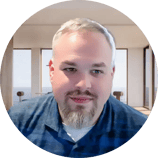 Michael has built a diverse career spanning system administration, Microsoft consulting, and enterprise-scale Windows 10 deployments for a Fortune 500 company. Today, as Director of IT – Enterprise Platforms and Endpoints at Adient, he oversees Mobility, Unified Endpoint Management, Content Delivery, and Enterprise Platforms within IT infrastructure. His hands-on expertise and leadership perspective make him uniquely equipped to share practical strategies for HAM and SAM success.
Meet Your Host
India Tellkamp
Account Executive, Ondaro
 India has been in the ServiceNow space for 7 years, helping clients ranging from small, unique organizations to Fortune 500 companies. She’s led everything from global transformations to onsite roadmapping efforts — always with a passion for enabling visions to come to life. Originally from a small farm town in West Michigan, India enjoys caring for her family’s cattle farm, trail riding, and spending time with her loved ones. Her approachable, real-world perspective makes her the perfect for guiding this conversation.
Why Attend?
- Learn from real-world success: See how a global manufacturer tackled asset management challenges head-on.
- Get practical strategies: Discover best practices that you can apply immediately in your organization.
- Find the right partner: Hear why Adient chose Ondaro and how the right partnership can accelerate results.
- Engage directly: Bring your questions for a live Q&A with Michael and the Ondaro team.
Don’t miss your chance to hear how Adient and Ondaro partnered to unlock greater visibility, efficiency, and value with ServiceNow HAM/SAM.
We’re with you for what comes next
You're working in a rapidly shifting environment.
Global dynamics, AI advancements, heavy competition–the only certainty is change.
We get it. And we’re here to help you harness the full potential of ServiceNow to simplify transformation.
Let's navigate the future together.

Recommended Articles
View all
ITAM
Webinar
ServiceNow
Webinar